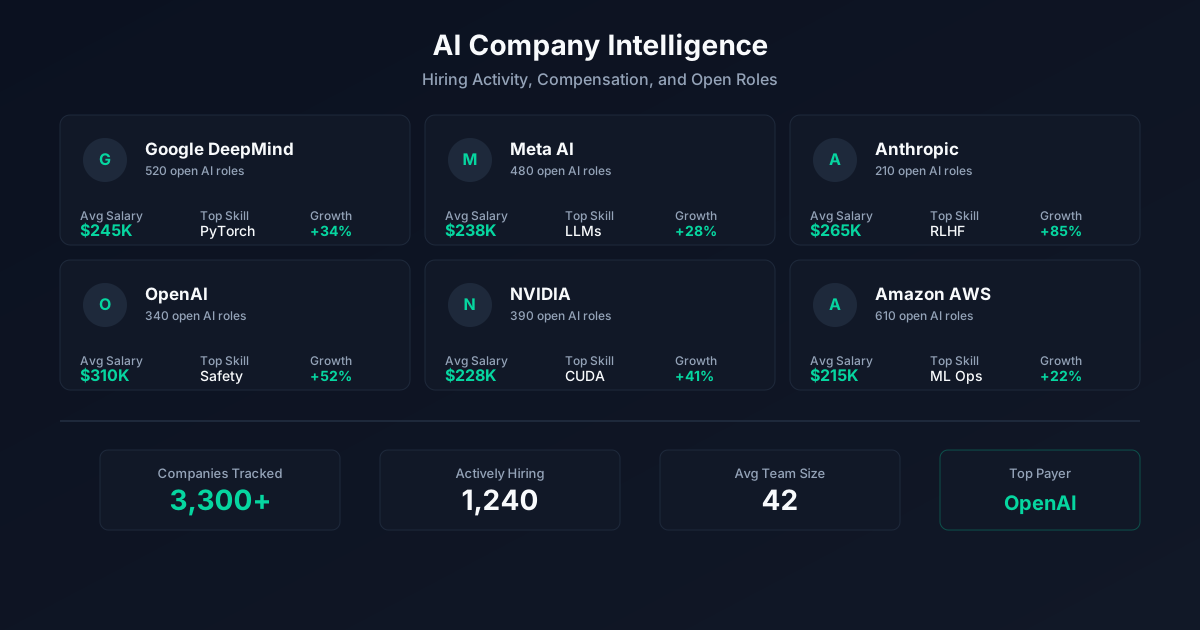
Head-to-head comparison of AI career opportunities at Amazon.com and Meta.
Side-by-Side Comparison
Amazon.com
Open AI Roles47
Salary Range$131K - $327K
Top RolesResearch Scientist, AI/ML Engineer, AI Product Manager, Data Scientist
Top Skills
PythonAwsRagTableauTensorflow
% Remote0.0%
Experience MixMid 51%, Senior 49%
Company StageUnknown
Meta
Open AI Roles18
Salary Range$121K - $356K
Top RolesAI/ML Engineer, Research Scientist, LLM Engineer, Research Engineer
Top Skills
PythonPytorchTensorflowTransformersJavascript
% Remote11.1%
Experience MixEntry 6%, Mid 94%
Company StageEnterprise/Public
Who Wins?
Best for Salary
Amazon.com
Median ceiling ~$223K
Best for Remote
Meta
11.1% remote positions
Most Roles Available
Amazon.com
47 open AI positions
Quick Verdict
Both companies offer comparable compensation, with median salary ceilings within 10% of each other. Amazon.com has many more open positions (47 vs 18), giving candidates a wider selection of roles and teams to target.
Which Should You Choose?
Choose Amazon.com if you prioritize:
higher compensation with median salary ceilings above the competition
broader role variety across 6 different AI job categories
more open positions (47 active AI roles)
working with Rag, Claude, Sagemaker
Choose Meta if you want:
more remote flexibility (11.1% remote positions)
working with Transformers, Javascript
Career Considerations
Beyond headline salary numbers, consider what each company offers for long-term career growth. Company stage matters: Amazon.com (undisclosed stage) and Meta (Enterprise/Public) offer different trajectories for skill development, title progression, and equity value. Remote work flexibility also affects quality of life and total compensation when you factor in commute costs and geographic salary adjustments.
Frequently Asked Questions
Amazon.com currently shows higher median salary ceilings for AI positions. Amazon.com ranges around $131K - $327K while Meta ranges around $121K - $356K. Keep in mind that posted salary ranges reflect base compensation and often exclude equity, signing bonuses, and annual performance bonuses that can add 10-30% to total compensation. Actual offers also depend on specific role, seniority level, location, and negotiation. Check individual job listings for the most current figures.
Meta offers more remote opportunities at 11.1% of their AI roles. Amazon.com is at 0.0% remote while Meta is at 11.1% remote. Remote availability can shift quickly as companies adjust return-to-office policies. Some roles listed as hybrid may allow mostly remote work in practice. If remote work is a priority, filter by the remote tag on individual company pages and pay attention to whether the listing specifies a geographic requirement.
Amazon.com focuses on Research Scientist, AI/ML Engineer roles, while Meta emphasizes AI/ML Engineer, Research Scientist. Skill requirements also differ: Amazon.com prioritizes Python, Aws, Rag, while Meta looks for Python, Pytorch, Tensorflow. These differences often reflect each company's core AI products and business model. The tech stack you work with early in your career shapes your trajectory, so consider which skill set aligns with your long-term goals.
Career growth depends on company stage, team size, and role scope. Amazon.com (Unknown) has 47 open AI roles, while Meta (Enterprise/Public) has 18. Companies with more open roles often provide faster internal mobility and broader project exposure. Look at the experience mix breakdown above to gauge whether each company is primarily hiring senior talent or building entry-level pipelines, as this signals different mentorship and advancement cultures.
Data Source: Analysis based on 65 AI job postings collected and verified by AI Pulse. Data reflects active job listings as of July 2026. Salary figures represent posted compensation ranges and may not include equity, bonuses, or other benefits.
Get Weekly AI Career Intelligence
Salary data, skills demand, and market signals from 16,000+ AI job postings. Every Monday.