
Key Takeaways
- Enterprise roles post 5% less median salary than startups ($218K vs $230K).
- Startups account for 1% of AI postings, enterprise for 9%.
- Startups offer 15% remote roles vs 15% for enterprise.
- Startups and enterprise employers often prioritize different skill sets, reflecting different AI maturity levels.
The Split
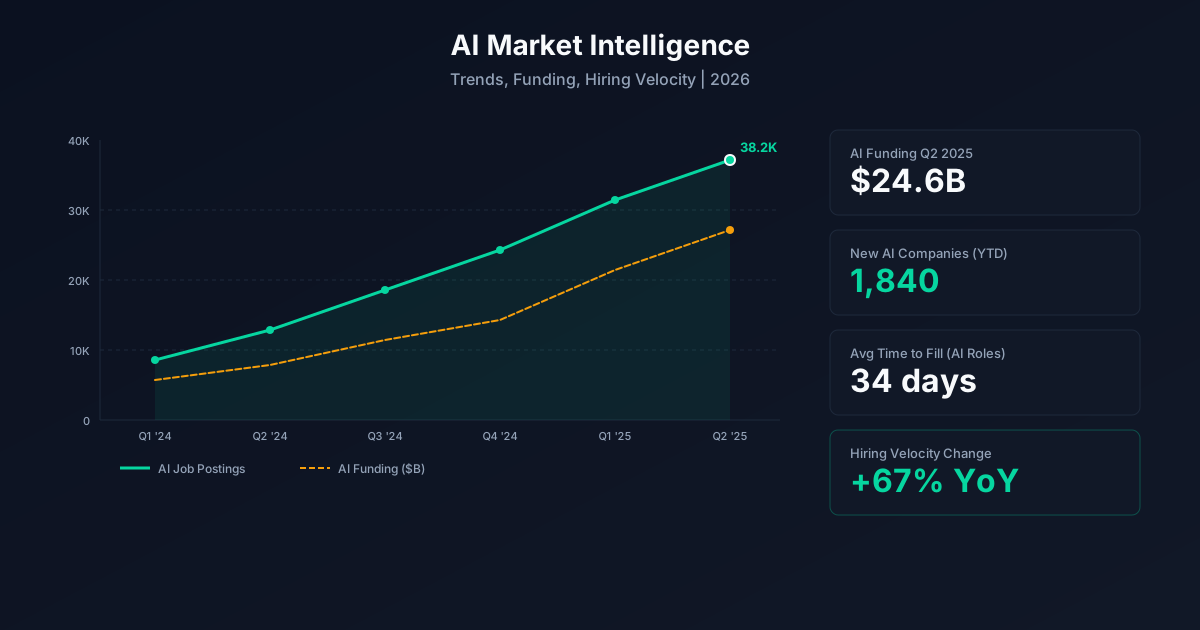
How AI job postings distribute across company stages, and what that means for compensation.
Salary by Role and Company Stage
Median max salary comparison between startups and enterprise companies, by role.
| Role | Startup | Enterprise | Difference |
|---|---|---|---|
| Research Scientist | $193K | $248K | +29% |
| AI Software Engineer | $254K | $235K | -7% |
| Research Engineer | $252K | $220K | -13% |
| AI/ML Engineer | $237K | $219K | -8% |
| Data Scientist | $181K | $176K | -3% |
Skills: Startup vs Enterprise
Top skills requested by startups vs enterprise employers show where priorities diverge.
| Skill | Startup Jobs | Enterprise Jobs |
|---|---|---|
| Python | 74 | 587 |
| Aws | 32 | 315 |
| Pytorch | 28 | 187 |
| Claude | 21 | 123 |
| Tensorflow | 20 | 117 |
| Azure | 18 | 226 |
| Gcp | 18 | 190 |
| Typescript | 16 | N/A |
| Kubernetes | 15 | 137 |
| Rag | 13 | 208 |
| Prompt Engineering | N/A | 114 |
Remote Work by Company Stage
Remote availability differs between startups and enterprise employers.
What This Means for Your Career
The data in this report points to actionable steps for AI professionals at every level. If you are entering the field, focus on the skills and role types showing the strongest demand growth. For mid-career engineers, the salary premiums and skill clusters above highlight where specialization pays off most. Senior practitioners should watch the company-level trends to identify where AI investment is accelerating and position themselves accordingly.
Methodology: This analysis is based on 11,520 AI job postings collected by AI Pulse in October 2026. Data is sourced from Indeed and company career pages. Only postings with disclosed salary information are included in compensation analyses.
Frequently Asked Questions
Explore Related Data
Get Weekly AI Market Intelligence
Salary data, skill trends, and hiring patterns from thousands of AI job postings. Delivered every week.

Rome Thorndike
Rome Thorndike is the CEO & Founder of Provyx, which provides GTM intelligence and data validation for healthcare companies, including EngagedMD and BTL Industries. He writes The AI News Digest for over 3,000 subscribers and previously led revenue at AI data company Firmograph.
Connect on LinkedIn